The Fastlane Millionaire Summary
Overall, the readability isn't great, but some of the ideas are worth pondering over and over again.
Read the physical book
Selling anxiety, shaping consensus: Slow wealth building is a game destined to fail; it wastes your time on gambling.
Slow wealth building means: sacrificing your today, your dreams, and your life, so that when your life is nearly over, you receive dividend payments.
People retire in their sixties or seventies. Even at that age, they still fall short financially and must continue to toil for survival, relying on government assistance to get by.
Slow wealth building takes a lifetime and is subject to too many uncontrollable factors. Spending 50 years at one job while living frugally, only to finally retire in comfort, yet spending those years confined to a wheelchair and plagued by illness.
How to change: Achieving financial freedom quickly, what is needed?
First, assess your needs. Specifically, how much money do you and your family need? How much does freedom and your desired lifestyle cost?
Define your lifestyle: What do you want? What exactly do you want? Write down your thoughts.
Evaluate the cost: What is the price of your dream? Determine how much you need to spend each month, including all taxes and insurance premiums.
Set goals: Build a money system and business income targets. This step requires setting two goals: business system income targets and money system targets. For the business system goal, multiply your total cost of living by 5.
Execute: Find a way and do it! Start by making a little money from the system and gradually achieve your goals.
Implementation strategies:
One is that you have a large enough sum of money that monthly interest alone can cover the expenses required for your lifestyle; the other is that you have a business system that generates passive cash flow, supporting your lifestyle while also funding your systems.
What is viable for most people is creating wealth:
Creating your own wealth essentially means building a money-making (business) system. There are only two core steps: productization and selling.
Productization:
Discover opportunities
"I hate..."
What do you hate? Resolving that hatred is your opportunity.
"I don't like..."
What do you dislike? Removing that annoyance is your opportunity.
"This bothers me..."
What is your frustration? Eliminating that trouble is your opportunity.
"Why is it like this?"
I don't know the reason behind it; finding the "why" is your opportunity.
"Do I have to do this?"
Do you have to? Removing the "have to" is your opportunity.
"I wish there were..."
What do you wish for? If you wish for it, others will too; making that wish a reality is your opportunity.
"I tried to..."
What have you tried? Solving someone else's frustration is your opportunity.
"That was terrible..."
What was terrible? Solving that problem is your opportunity.
Opportunities are easy to describe in plain language: discomfort, poor conditions, inconvenience, complaints, problems, and underperformance. You must face these challenges, provide solutions to the public, and ensure making money! In other words, solving others' problems solves your own making money problem!
Unmet needs are a major avenue, even if they seem blocked. Successful businesses can adopt existing ideas, services, and products, simply doing them better or using new approaches. Innovation can be optimizing existing solutions + better service and execution; as long as there is a differentiated advantage, do you need a completely brand-new idea? No, you just need a need that requires better resolution and perfect execution.
Standardize the solution (product, service, etc.) and quantify the price to build your own commercial product.
Then, sell it
Translate product features into benefits
First, swap roles with your target buyer; act as the customer. Who are your customers? What are their typical behaviors? Are they generous-spending CEOs, or price-sensitive shoppers like at Walmart? Are they students with tight budgets? Or single mothers? If you cannot identify what your target customer is like, your results won't be ideal, and features won't turn into benefits. Once you confirm who the buyer is, ask: What do they want? What do they fear? What problems do they need to solve? Or what do they want to "feel"?
Overcoming marketing noise
Polarization
Polarization may not be the best strategy for a mass-market brand because polarization involves extreme views or information.
Sexual attraction
Sex can attract attention and is the most commonly used method to cut through the noise.
Triggering emotions
Most consumer purchasing decisions are influenced by emotions.
Interaction
Seeing and doing are different things. Interactivity increases responsiveness. If you can taste, feel, or use something, you are more likely to buy it.
Develop your Unique Selling Proposition (USP)
There must be a valid reason for entering an industry: solving a problem or meeting a certain need. Your sales proposition must first meet this condition. If you have already been in business, identify the biggest advantage of your product to distinguish it from others. Keep the customer in mind when doing this. Consider what needs they have and what they want.
The goal of a sales proposition is to be unique; this is the logical basis for consumers to choose you. If they don't choose you, they lose this benefit. A unique sales proposition should use powerful verbs to generate desire and urgency.
Sales propositions must be specific; if possible, provide evidence.
Website: "Your car will sell within 20 days, or it's free."
Product: "Lose 20 pounds, or you pay nothing."
Service: "Your house will sell within 30 days, or we'll buy it."
If you have a unique sales proposition but don't express it, it has no value. Use your unique sales proposition in all your marketing materials.
A unique sales proposition must be convincing enough to drive purchases; it's even better if it turns people into loyal consumers of the brand. If it fails to capture the audience's attention or is too weak, it won't work, and you must deliver on the promise made in the sales proposition. If a pizza takes 40 minutes instead of 30, you've broken the 30-minute promise. Fraudulent sales propositions will soon be exposed, causing people to abandon you.
Cultivate business evangelists
The answer is providing customer service that exceeds expectations.
Customer service that exceeds expectations shatters customers' originally low expectations, turning them into loyal clients and evangelists for your business. They will continuously do free advertising for you. Word of mouth is a powerful advertising tool because it is free and yields infinite return on investment.
When you place yourself as a stakeholder and abandon the customer, you suffocate long-term business. Want to know why customer service is so bad? It's because business owners place customers at the very bottom of the stakeholder chain. Publicly traded companies are the worst because they put shareholders first, Wall Street second, and managers third. Customers are ranked lowest by them.
"Customers pay our salaries, so you must make them happy." My stakeholders are not my selfish desires for nice cars and mansions, but my customers, because I know they have that power. I am loyal to my customers; they are my bosses, holding everything I want.
Whenever you exceed customer expectations, you gain a double benefit: first, they will continue to buy from you; second, customers become evangelists and free missionaries for your business. Both increase speed and accelerate wealth accumulation.
Other financial intelligence insights:
Businesses everyone does can only bring mediocre income
The only metric people use to decide to buy commoditized products or services is price. If your product isn't like that, it's because it differentiates itself better than other products. If your product doesn't stand out, it won't get the opportunity, and you'll be forced to engage in price-cutting competition.
If your product is commoditized, you must distance yourself from other products and differentiate to overcome the shortcomings of commoditization.
The easy path is more crowded, leading to fiercer competition, and participants can only achieve lower profits. "Everyone is doing it" is a signal for speculative money and foolish money to enter.
Do what you love?
"Doing what you love" is never a good choice. Consider: would anyone be willing to pay for the things you love doing? Does this solve a demand problem? Can you make money doing it? The answer is mostly no.
To make "doing what you want to do" viable, two conditions must be met: first, your hobby must solve a certain need; second, you must be indispensable in this endeavor.
Partners aren't looking for synergy; they seek dispersion of risk, costs, and workload.
People form partnerships for the wrong reasons. Just as people start businesses for wrong ideas (not出于 demand), they also form partnerships for similar wrong reasons.
Usually, each partner looks to others to share the burden, and resentment arises when one person takes on more.
· Do you have the same work attitude? When you are pulling all-nighters, is your partner ice skating?
· Do you have the same vision? Or are your ideas in conflict?
· What if you want to grow slowly while your partner wants faster growth and to own everything?
· What if you want to sell franchise rights, but your partner wants to go solo?
· Do you trust your partner?
· Are your personalities similar to your partner's?
5 Commandments: What you should not do
You should not invest in a business with no demand;
You should not exchange time for money;
You should not run a business at a limited scale;
You should not give up control;
You should not treat a startup business as a result rather than a process.
What can be satisfied often includes:
· Internet businesses.
· Creating new products or services.
· Creating economies of scale.
Internet business models can be divided into the following 7 categories.
(1) Providing subscription services.
Provide users with data, information, or software for a monthly fee. Data can be leads, sales information, proprietary databases, or images. No products, no shipping, no worries.
(2) Providing content services.
The content model refers to online news magazines and blogs targeting specific markets or industries. These service providers offer free content to make money by selling ads. Profit models based on content are the hardest to succeed with because entry barriers have dropped significantly.
(3) Referral sales (promotion rebates).
Referral sales services typically integrate non-homogeneous industries while providing services to consumers. Referral sales are popular in fragmented industries, which are mainly small and medium-sized enterprises. Referral sales addresses two needs: first, the consumer's desire to save time and money; second, the enterprise's need to find new customers cheaply.
(4) Social networks.
(5) Brokerage systems.
Brokers bring buyers and sellers together to complete transactions. They are intermediaries in an industry and make money from each transaction.
(6) Ads.
Similar to brokers, advertisers also match buyers and sellers. Unlike brokers, advertisers accept advertising fees rather than transaction fees.
(7) E-commerce.
Creating new products or services
Innovation includes two types of actions: making and sales. That is, innovation includes all activities before sales.
Inventing a product can be sold through TV shopping, the internet, or QVC, or sold by 10,000 online distributors, or sold to 20 wholesalers who then sell to 20,000 retailers.
Is the project you created lifelong servitude?
· Can this business operate automatically and orderly when I'm not there?
· Is my marginal return high enough that I can hire someone to do it?
· Does my operation benefit from this being a cash-cow-like business?
· How to make the business run without occupying my own time?
A business that keeps you trapped is just a job.
Scale is leverage
Business scale can be likened to environments near water. You can choose to live by the seaside or by a pond in a local park. There are several business ecosystems:
· Local/community (water tank)
· County/city (pond)
· Statewide (lagoon)
· Regional (lake)
· National (sea)
· Global (ocean)
It is hard to find scale in a local or a small water tank that can only hold a few people. Of course, it's not impossible, but it requires a certain volume, and volume costs money. The larger the environment, the greater the leverage.
· Is the net income of this business uncapped, e.g., from $2,000/month to $200,000/month?
· Is the asset value of this business in the millions?
· Can this business affect millions of people? Or thousands? Is its customer base worldwide, or a small community in town?
· Can this business be replicated and expanded beyond the local trading circle through chains, licensing, or opening stores?
· In the best case, how many units can you sell? 100 or 100 million?
· In the best case, what is the maximum unit profit achievable? Is it on a significant scale?
If you cannot give affirmative answers to these questions, this business may be limited, and wealth creation will be hindered.
Small business ecosystems can only create a small amount of wealth. Scale is about big numbers; try to think bigger—national or global. Big numbers or scale are needed to realize the law of influence. To make big money, you must impact millions of people. This is unlikely to happen in a small shop on Main Street, but stores nationwide have the opportunity.
If you don't value your own time, you will be poor.
If you don't value your own time, you will be poor. If you consider wasting time as your chosen lifestyle, you will never reach where you want to go.
Most people's thoughts only lead to mediocrity. For them, the value of time is underestimated and casually wasted. Frugal people who can't do the math are willing to waste time to save money, but the time wasted cannot be compensated by the small amount saved.
The source of poverty
The source of poverty stems from "choices." Wrong choices are the main cause of poverty. Rebellious and wrong choices can cause irreversible damage to your life, dreams, and goals.
Common wrong choices:
· Choosing to cheat during exams or while studying.
· Choosing to squander money in college because your parents are supporting you.
· Choosing to lie instead of being honest.
· Choosing to drive a vehicle without insurance.
· Choosing bad people as friends.
· Choosing to watch TV or read worthless books.
· Choosing to drive at 169 km/h in a zone with a 90 km/h speed limit.
· Choosing to rob a convenience store at the alley entrance.
· Choosing overeating or alcoholism.
· Choosing to believe in people with no track record.
· Choosing to deceive important people around you.
· Choosing to buy things on a credit card without a plan.
· Choosing to indulge yourself every weekend.
· Choosing to finalize suppliers without investigating their qualifications.
· Choosing to play electronic games for more than 30 hours a week.
· Choosing to marry within 4 weeks of meeting someone.
· Choosing to start a company with an incompetent partner.
Choices made when young have the strongest radiating power; they can spawn your trunk. As time passes, branches keep climbing to the treetops, becoming increasingly slender. They can no longer bend the big tree in new directions because the trunk's age and experience are already too old, and their habits are firmly established.
You must make the right choices as youthfully as possible. Even the smallest choices you make in daily life will continuously change your habits and lifestyle. This requires a process, but ultimately produces powerful influence.
No matter your age, review your life and analyze which forks in the road you chose to take. Which path you walk is your choice; every path carries powerful force, leading you to different places. Whatever decision you make today will inevitably affect your tomorrow, perhaps for the coming weeks, months, years, decades, or even generations.
Two techniques to make better choices
The first decision tool is WCCA, which requires forward-thinking and potential consequence analysis. WCCA asks you to answer 3 questions about the consequences of each decision:
· What is the worst consequence of this choice?
· What is the probability of this consequence?
· Is this an acceptable risk?
Although these 3 questions may seem lengthy, your analysis process takes only a few seconds. You don't need a pen or paper; you can make conscious choices just using your mind. When analyzing your choices with the WCCA strategy, those potential negative factors will be fully exposed, allowing you to choose alternatives and easily eliminate the bad options.
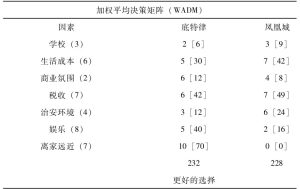
Use a weighted average decision matrix; you need at least two options, and the more the better.
Get a pen and paper, draw N columns on your paper, one column is "Factors," and the other columns are options. Assign a weight of 1 to 10 to each decision factor based on importance, where 10 is the most important factor, and write the number next to that factor. Then score each option (rate it), multiply the score for each row by the weight, and write the result in parentheses next to the score. Finally, each option will have a total score; make your choice based on the scores.
Different approaches, same result
Saving money allows you to accumulate wealth
Most people realize they cannot force the stock market to give them higher returns, cannot force their boss to give them a 200% raise, and cannot guarantee that pursuing higher education will increase their intrinsic value (getting a high-paying job). Changing jobs will only slightly increase salary. We are subject to mathematical formulas and can only manipulate the only controllable variable, which is increasing personal net income. This can be achieved by cutting expense outflows.
Personal net income = Income - Personal expenses (i.e., reducing expenses)
Consciously build these wealth mindsets
View on debt: If allowed to build and develop my money-making system, debt is useful.
· View on time: Time is the most important asset I possess, far surpassing money.
· View on education: The moment you stop learning, you stop growing. Continuously expanding my knowledge and understanding is crucial to my wealth journey.
· View on money: Money is everywhere and very abundant. Money is a true reflection of how many people I have influenced and also reflects my ability to create value.
· Primary income source: My income comes from my business operations and investments.
· Primary wealth accelerator: I am self-made. I empower assets to make money, making them valuable to the market. There are also times when I use existing assets to appreciate them.
· View on wealth: Building business systems for cash flow and asset evaluation.
· Wealth formula: Wealth = Net profit + Asset value.
· Strategy: The more I付出, the richer I become in terms of time, money, and personal satisfaction.
· Destination: Earn passive income for life, both through business and through investments.
· Responsibility and control: Life is about how I shape it. My financial plan is entirely my responsibility; I choose how to react based on circumstances.
· View on life: No matter how unique my dreams are, they are worth pursuing. I believe having money makes dreams come true.
Let society be your university
You must invest, get your hands dirty, and connect with others, rather than just learning from books or professors.
Education is free. Endless knowledge is at your fingertips; the only obstacle in your way is yourself. Imagine if you could digest every book, every chart, and every sentence; would "I don't know" still hinder your success?
You don't need talent; with firmness and hard work, you can become an expert in a certain field.
The best investment you can make is investing in yourself. So you should be willing to spend money on your education; otherwise, sooner or later you will pay a higher price for lacking education. The choices you make today will determine your future financial situation. Make sure you make the right choices because you will have to bear the consequences of those choices.
Time can always be squeezed out. As long as you pay attention to the repetitive activities you are doing now, you will discover:
· "Driving" University: Listen to audiobooks or financial news while stuck in traffic, turning wasted commuting time into education.
· "Exercise" University: When working out at the gym, you can read books or magazines and watch podcast videos during breaks. During rest intervals, on the treadmill or stationary bike, you can turn physical exercise into education.
· "Waiting" University: When expecting a painful and long wait, bring something to read. Such as at the airport, hospital, or motor vehicle management departments. Stop sitting there idly; learn!
· "Restroom" University: Never waste this toilet-sitting time; read something educational. Use this daily "sitting time" to learn something new. The "Restroom" University is the best place to change "engine oil" because this time occurs every day and is unavoidable. This means the return on your time investment is infinite! Turn the time spent in the restroom into education.
· "Work" University: If possible, read a bit during work breaks. I once had terrible jobs (as a luxury car taxi driver, pizza delivery person); I utilized a lot of "waiting time" at work. Although I was waiting for passengers, delivering pizza, and ordering flowers, I was also reading. I didn't play card games out of boredom. If you can utilize these hard-to-pass times at work, you will learn something. Turn boring work into education.
· Television University: You can't quit watching TV? No problem. Place the TV near your workstation, keep the TV on, and do your own planning work.
Pick a topic that interests you or a area in your life that needs improvement. Not good at marketing or writing? Go read books.
Set a goal to read at least 12 books a year, i.e., one book a month. The more knowledge you master, the greater the扭转 force you create in your wealth.
How to distinguish good and bad knowledge content paid resources?
First, look at the price.
Any unreasonable situation is a warning signal indicating that the organizer is more interested in making money than in providing education.
Second, still look at the price.
Be wary of free programs; free usually means 8 minutes of education plus 8 hours of pitching higher-priced seminars.
Third, who is the speaker? Are they a professional speaker? Or someone using this to practice teaching skills? Read the promotional materials carefully.
"XX Master's strategy has already made him millions!" Yet the materials also say: "XX Master won't attend/share."
Take wise risks, abandon pointless risks
Wise risks have limited downside space, while their upside space is infinite. Pointless risks have infinite downside risk, while the upside space is limited, at least in the short term. Commonly known as making decisions based on the profit-loss ratio; if the potential profit is high and the loss is limited, you should go for it.