Zhu Yuanzhang: How a Beggar Became Emperor of China
Zhu Yuanzhang: How a Beggar Became Emperor of China
In the spring of 1344, a sixteen-year-old boy in eastern China faced a problem no son should ever face. His father was dead. His mother was dead. His eldest brother was dead — all of them gone within days, taken by hunger and disease. The boy had no money for a coffin and not even a scrap of land to bury them in.
A neighbour took pity and gave him a corner of a field. The boy and his one surviving brother wrapped the bodies in cloth and laid them in borrowed ground. That boy owned nothing on earth — not even a grave for his parents.
Twenty-four years later, he owned China.
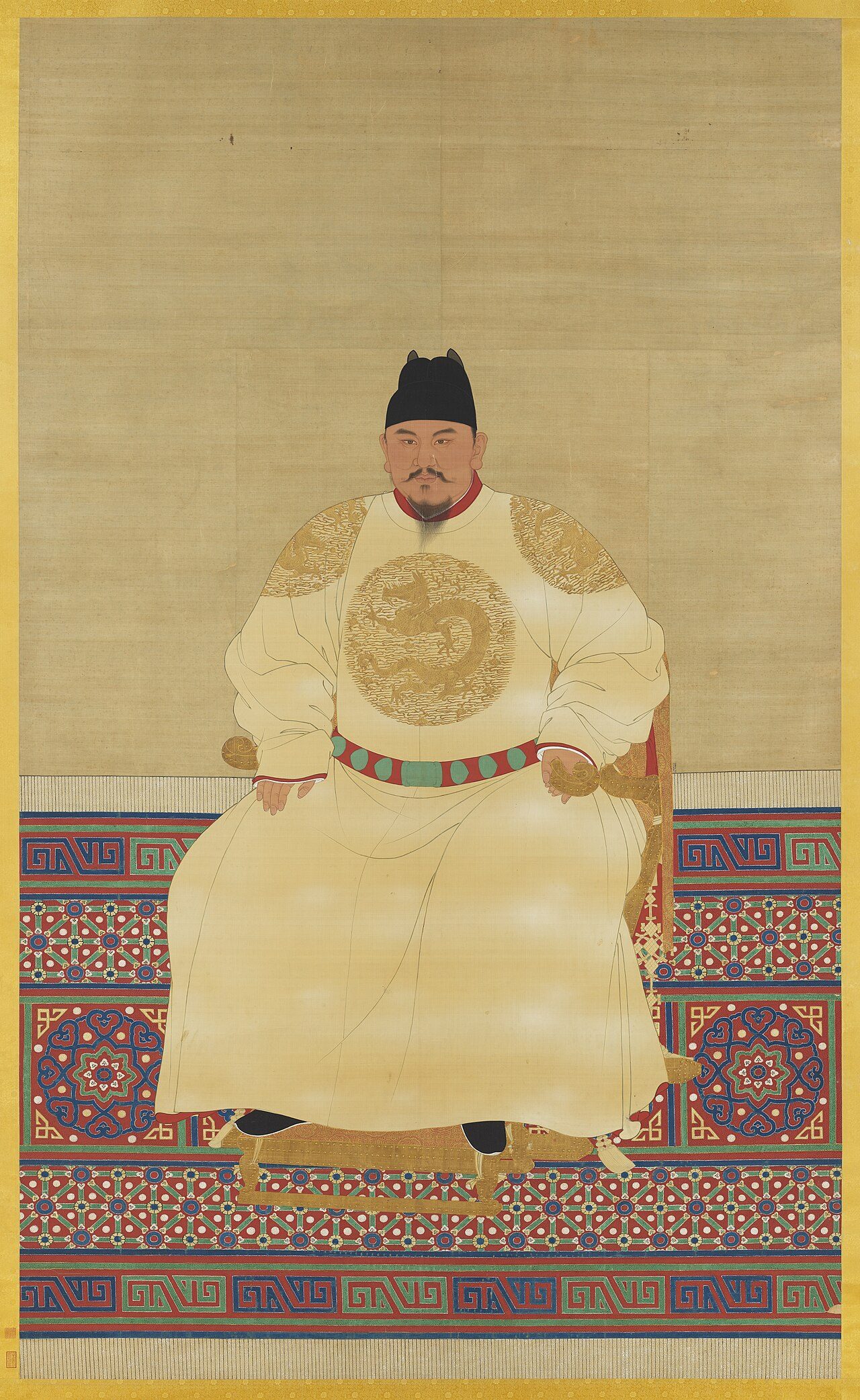
His name was Zhu Yuanzhang, and his rise from famine orphan to founding emperor of the Ming dynasty is one of the most extraordinary in world history.
A Village Under the Mongols
Zhu Yuanzhang was born in 1328 in Zhongli village, near Haozhou — today Fengyang, in Anhui province. He was the youngest son of a peasant family. His parents did not own the land they worked; they farmed it for someone else, kept a share of the harvest, and in a bad year went hungry.
The China he was born into was ruled by the Yuan dynasty, the empire of the Mongols, founded by the grandsons of Genghis Khan. For a poor family on the Huai River plain, life was a chain of taxes, floods and failed harvests. The early 1340s made it worse: drought cracked the fields, locusts came, famine followed, and after famine came disease.
In 1344 the sickness reached the Zhu family's door. His father, mother and eldest brother died within about half a month. Two brothers were left alive — and the family had been so poor that there was nothing left to bury the dead with. That burial on borrowed land ended Zhu Yuanzhang's childhood.
The Begging Monk
To stay alive, Zhu did what poor boys in his world often did: he became a novice monk at the local Buddhist monastery, Huangjue Temple. The temple gave him a roof, but famine had emptied the countryside, offerings dried up, and soon the temple itself ran out of food. So the monks sent the novices out onto the roads to beg.
For the next three years, Zhu Yuanzhang wandered from village to village with an alms bowl, across what is now Anhui and Henan. He slept where he could and ate what strangers gave him. It was an education no school could have given him: he learned how the poor lived, what they feared, and how much they hated the tax collectors.
In 1348 he returned to the temple and stayed four more years. There, finally, he learned to read and write. Meanwhile, rebellion had broken out across China against the Yuan — rebels who wore red scarves and called themselves the Red Turban Army. In 1352, Yuan troops burned his monastery down, suspecting the monks of rebel ties. This time, Zhu Yuanzhang did not go begging. He went to war.
From Rebel Soldier to State-Builder
Zhu joined the force of a Red Turban commander named Guo Zixing in the rebel-held town of Haozhou. He arrived as an ordinary foot soldier, with nothing — and took the name Zhu Yuanzhang. Guo noticed him quickly: Zhu fought well, thought clearly and stayed calm when others panicked. Within a year he had recruited some 700 men from his home villages, led by 24 of his old companions — men who would one day be Ming generals.
He also married Guo's adopted daughter, Lady Ma — sharp, capable and loyal. She would stand beside him for the rest of her life, and he would make her his empress. Guo Zixing died in 1355, and his army passed, piece by piece, into Zhu's hands.
Then Zhu did something the other rebel chiefs did not do. He took the city of Nanjing in 1356 — and instead of looting it, he governed it. He set up an administration, brought in educated scholars to teach him statecraft and the Confucian classics, and gave unused land to peasants who had none, so the fields around his city produced food instead of refugees. The other warlords were still raiding. Zhu Yuanzhang was building a state.
The Battle of Lake Poyang
Two rivals still stood between Zhu and the south. The strongest was Chen Youliang, a warlord who had crowned himself emperor and held the middle Yangtze from his base at Wuchang. His fleet of giant tower ships was far larger than anything Zhu could float.
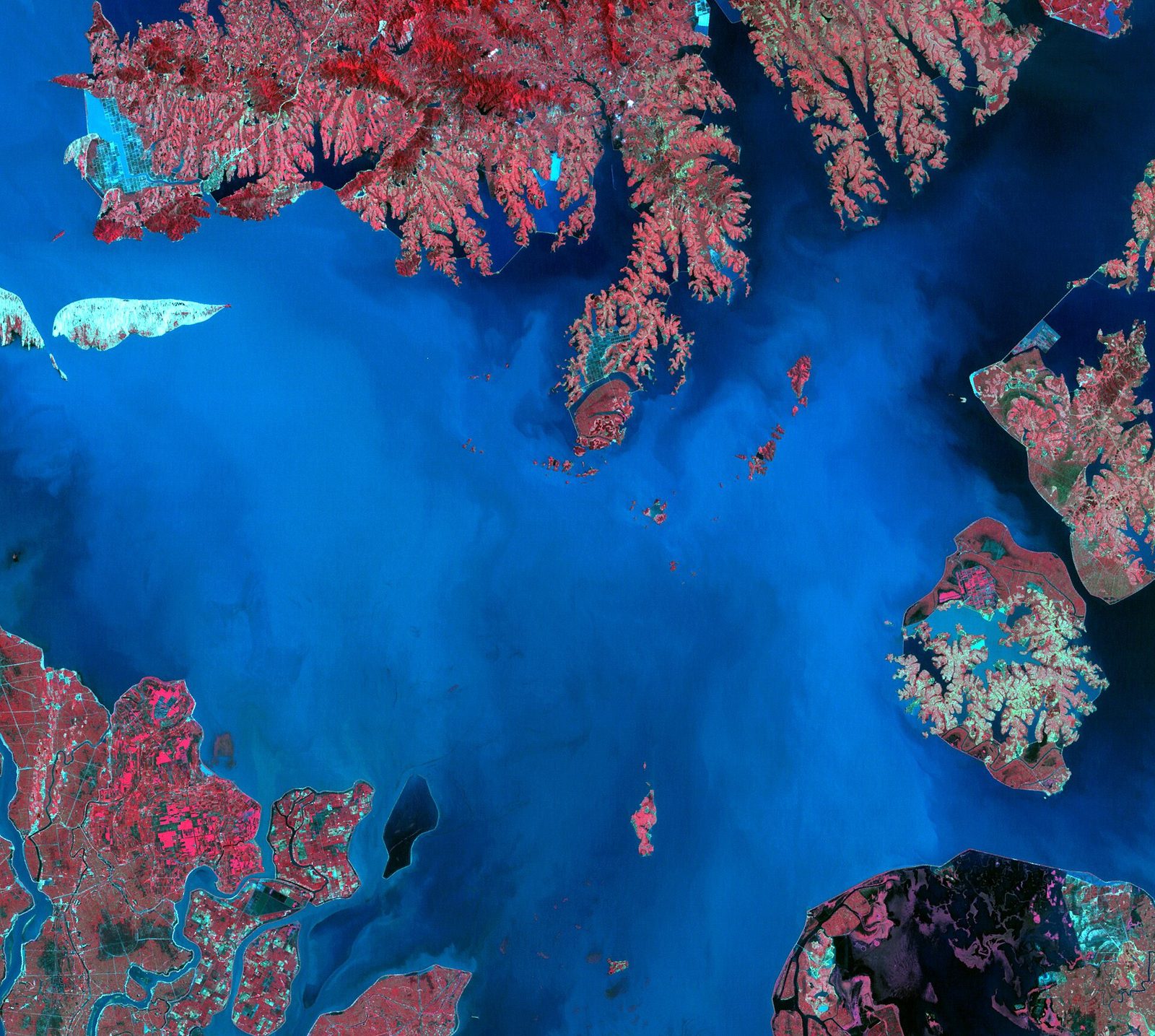
In 1363 the two fleets met on Lake Poyang, one of the largest freshwater lakes in China. Zhu's boats were smaller — and faster. After the first hard fighting, he sent in fire ships: vessels packed with fuel and set ablaze, driven straight into Chen's towering fleet. The great ships caught, burned and broke apart on the water. Chen Youliang was killed in the battle, and his capital Wuchang fell the next year.
One by one, the remaining rivals fell. The last of them, Zhang Shicheng, was captured in 1367. Now Zhu turned north, where the Mongols still held an empire, sending his best generals Xu Da and Chang Yuchun on the northern expedition.
On a January day in 1368, in Nanjing, Zhu Yuanzhang proclaimed himself emperor. He named his dynasty Ming — "Great Radiance" — and took Hongwu, "Vastly Martial," as the name of his reign. That same year his armies marched into Dadu, the Yuan capital — the city we now call Beijing. The Mongol emperor fled north into the steppe. The Yuan dynasty was finished.
Meanwhile, Around the World
Step back and look at the wider world in that same year, 1368.
In the west, England and France were deep in the Hundred Years' War — a struggle already thirty years old, with more than eighty years still to run. Europe was still counting its dead: between 1347 and 1351, the Black Death had swept the continent and killed perhaps a third of its people, and western Europe's population would not climb back for over a century.
Closer to China, another power was on the move. Ottoman Turks under Sultan Murad I were pushing deep into the Balkans. Adrianople — a great Byzantine city the Turks call Edirne — fell to them in those years and became their capital.
And in Central Asia, a warlord in his early thirties named Timur was still fighting for his own home ground. He ruled no empire yet; that would come in 1370. Everywhere, the old order was cracking. In China, it cracked in favour of a beggar.
An Empire Run by One Man
Winning an empire turned out to be the easy part. Running one, Zhu insisted, he would do himself.
He wanted to know exactly what he ruled. His officials counted every household and mapped every field — the field maps were drawn plot by plot, in patterns people compared to the scales of a fish. Villages were organised into groups of households that collected taxes and took turns at public duties. Farmers who brought abandoned fields back to life were rewarded, and the landless were given land to work. A country wrecked by decades of war slowly began to feed itself again.
But the man who had clawed his way up from nothing trusted almost no one who wore an official's robe. So power flowed upward, into a single pair of hands. In 1380, his chancellor, Hu Weiyong, was accused of plotting against the throne and executed. Zhu then abolished the chancellor's office altogether. From that year on, the Ming would have no prime minister: the six ministries reported to the emperor — and the emperor read everything himself.
The Price of Suspicion
Age did not soften Zhu Yuanzhang. The Hu Weiyong case did not end with one man's death in 1380; it spread, year after year, through families, students and colleagues. By the traditional count, it eventually claimed tens of thousands of lives.
Then, in 1392, his chosen heir died — his eldest son, Crown Prince Zhu Biao, the man he had trained for the throne for decades. The succession passed to a grandson still in his teens. Faced with a teenage heir and a court full of victorious old generals, the old emperor did the arithmetic in the way he always had.
In 1393, his finest surviving general, Lan Yu, was arrested on a charge of plotting rebellion and executed. Some fifteen thousand people were dragged into that case, by the traditional count — officials, officers and their families. Historians still argue over the true numbers, and over whether the plots were ever real. What is not in doubt is the result: the generation that had won the empire was almost gone.
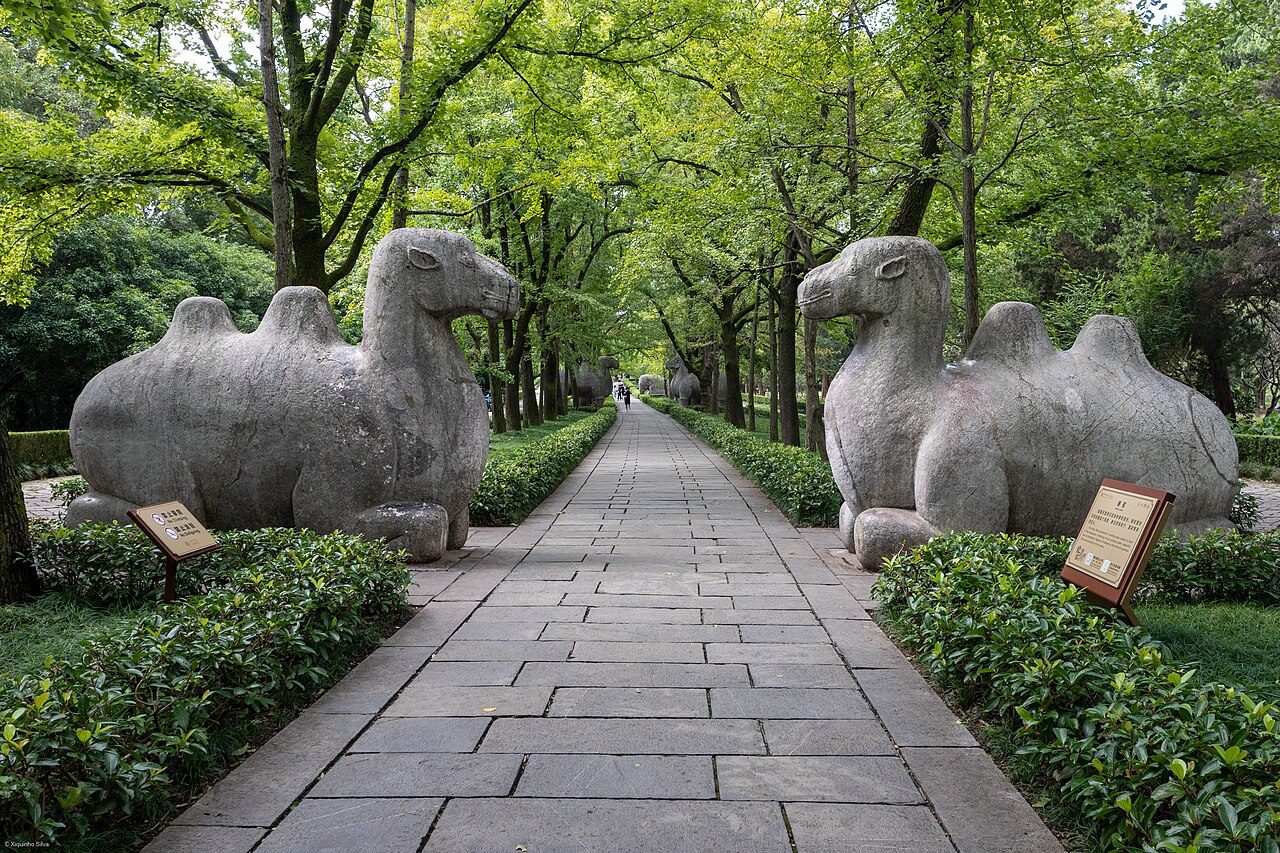
Zhu Yuanzhang died on 24 June 1398, after thirty years on the throne. He was buried beside Empress Ma in a tomb he had begun building in 1381, on the southern slope of Purple Mountain outside Nanjing — the Ming Xiaoling Mausoleum. Its stone road of animals and officials still stands today, and the tomb is now a UNESCO World Heritage site. The dynasty he founded would rule China for 276 years.
FAQ
Who was Zhu Yuanzhang?
Zhu Yuanzhang (1328–1398) was a peasant-born rebel leader who overthrew the Mongol Yuan dynasty and founded the Ming dynasty in 1368, reigning as the Hongwu Emperor for thirty years.
How did Zhu Yuanzhang become emperor?
Orphaned by famine in 1344, he survived as a Buddhist novice and begging monk, joined the Red Turban rebels in 1352, rose under commander Guo Zixing, took Nanjing in 1356, defeated his strongest rival Chen Youliang at Lake Poyang in 1363, and proclaimed himself emperor in 1368.
Why did Zhu Yuanzhang abolish the chancellor's office?
After Chancellor Hu Weiyong was executed for an alleged plot in 1380, Zhu abolished the office permanently. From then on, the six ministries reported directly to the emperor, concentrating power in the throne.
How long did the Ming dynasty last?
The Ming dynasty, founded by Zhu Yuanzhang in 1368, ruled China for 276 years, until 1644.
Where is Zhu Yuanzhang buried?
He is buried with Empress Ma in the Ming Xiaoling Mausoleum on Purple Mountain in Nanjing, begun in 1381 and now a UNESCO World Heritage site, famous for its avenue of stone animals and officials.